So You Want to Run Your First 5K (But Your Bladder Has Other Plans)
So You Want to Run Your First 5K (But Your Bladder Has Other Plans)
You signed up. Maybe a friend talked you into it, maybe it popped up on your feed, maybe you just decided this was the year. Either way — you want to run your first 5K, and that's genuinely exciting.
But somewhere around your second or third training run, something happened that you weren't expecting. Maybe you leaked. Maybe you felt a heaviness or pressure down there that you couldn't quite name. Maybe you just knew something wasn't right, even if you couldn't explain it, so you stopped — and you haven't laced up since.
First: you're not broken. And second: this is not something you just have to live with.
Let's talk about what's actually going on.
Why running is hard on the pelvic floor
Running is a high-impact activity. Every single stride, your foot hits the ground with roughly 2.5 times your body weight in force — and your pelvic floor has to absorb and manage that load, thousands of times per run.
Your pelvic floor is a group of muscles at the base of your pelvis that support your bladder, uterus, and bowel. When those muscles are functioning well, they contract and relax in coordination with your breath, your core, and your movement. When something's off — whether that's weakness, tension, or a coordination issue — impact activities like running are often the first place you feel it.
The most common things people experience:
Leaking urine during or after running (stress urinary incontinence)
Urgency— that sudden, gotta-go-now feeling that hits mid-run
Pelvic heaviness or pressure that gets worse as mileage increases
Pelvic pain during or after runs
Here's what's important to understand: leaking iscommon, but it is not normal. It's a signal. Your body is telling you that the demand exceeds the capacity right now — and that's a fixable problem.
The "just do more Kegels" myth
If you've Googled any of this, you've probably already found the advice to do Kegels. And for some people, Kegels can be helpful. But for a lot of runners dealing with pelvic floor symptoms, the problem isn't weakness — it'stension.
A pelvic floor that's too tight can't absorb impact effectively. It can't coordinate the way it needs to. Asking it to squeeze harder doesn't help; in some cases it makes things worse. This is one of the reasons self-treating pelvic floor symptoms without an assessment can keep you stuck for months.
The other piece that often gets missed: your pelvic floor doesn't work in isolation. It's part of a system that includes your diaphragm, your deep core, your hips, and your lower back. When any of those pieces aren't doing their job, your pelvic floor picks up the slack — and eventually it hits a ceiling.
So what does a 5K training plan look like when your pelvic floor is involved?
It looks like starting with an honest assessment of where you are right now. Not where you think you should be, and not pushing through symptoms hoping they resolve on their own.
Here's what we look at:
Breathing mechanics. Most people hold their breath when they exert effort — and that spikes intra-abdominal pressure in a way your pelvic floor has to manage. Learning to breathe properly during exertion is foundational.
Load management. Going from zero running to three miles isn't a pelvic floor problem — it's a programming problem. Impact tolerance is a trainable quality, and it improves with progressive exposure, not white-knuckling through discomfort.
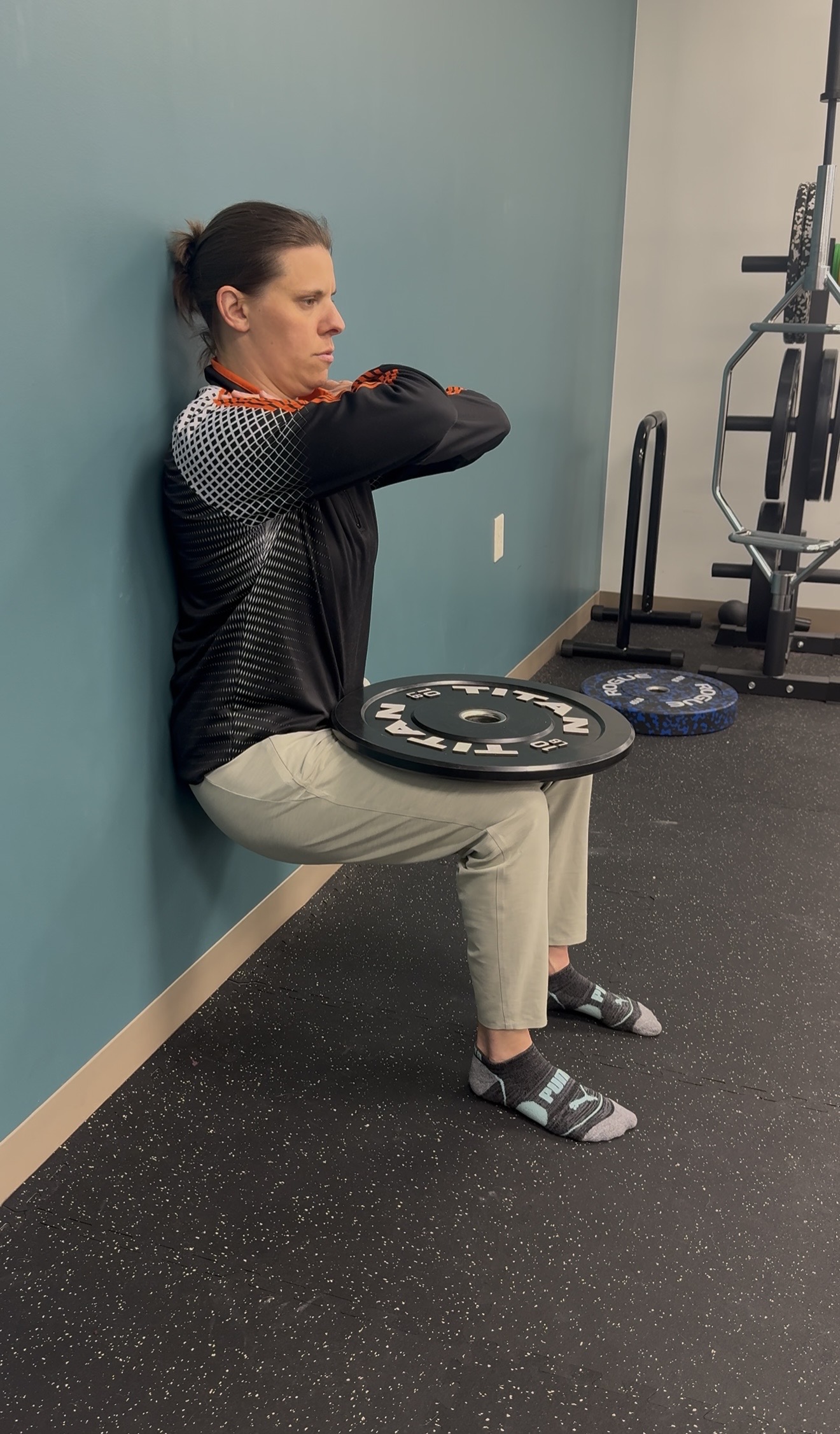
Hip and glute strength. Your glutes are major contributors to impact absorption. If they're not doing their job, your pelvic floor is doing double duty. This is especially relevant for people who spend most of their day seated.
Your specific symptom pattern. When does the leaking happen — at the start, mid-run, or after? Does pressure come on with mileage or immediately? Is there a particular stride pattern or surface that makes it worse? The details matter, because they point to the mechanism.
When to get help
If you're experiencing any of the following, working with a pelvic floor physical therapist before your race is worth it:
Leaking on any run, even short ones
Symptoms that are getting worse as training progresses
Pelvic heaviness, pressure, or bulging (which can indicate prolapse)
Pain in your pelvic region, hips, or low back that started with running
A history of childbirth, pelvic surgery, or chronic pelvic issues
A pelvic floor PT can do an internal and external assessment with consent, look at how you move and breathe, and put together a plan that addresses your specific presentation — not a generic protocol.
The goal isn't to stop running. The goal is to make sure your body is ready for it.
You can do this
Running your first 5K is achievable. So is doing it without leaking, without pain, and without that low-grade anxiety about whether today is going to be a bad run.
Your pelvic floor is not your enemy here. It's a hard-working group of muscles that responds well to the right kind of training and support. The folks that we work with at Renew Health cross finish lines. They do it comfortably. And a lot of them spent years thinking what they were experiencing was just part of being a woman or a mom.
It's not.
If you're ready to figure out what's actually going on — and build a training foundation that lets you run the way you want to — we'd love to help.
Book a free call. We're in East Longmeadow, MA, and we work with folks at every stage of their running journey — first-timers, returners, and seasoned athletes who just need some recalibration.
Race day is waiting. Let's get you there.
