
Renew Health Blog 💭
Practical Pelvic Floor Thoughts from Your Experts at Renew Health
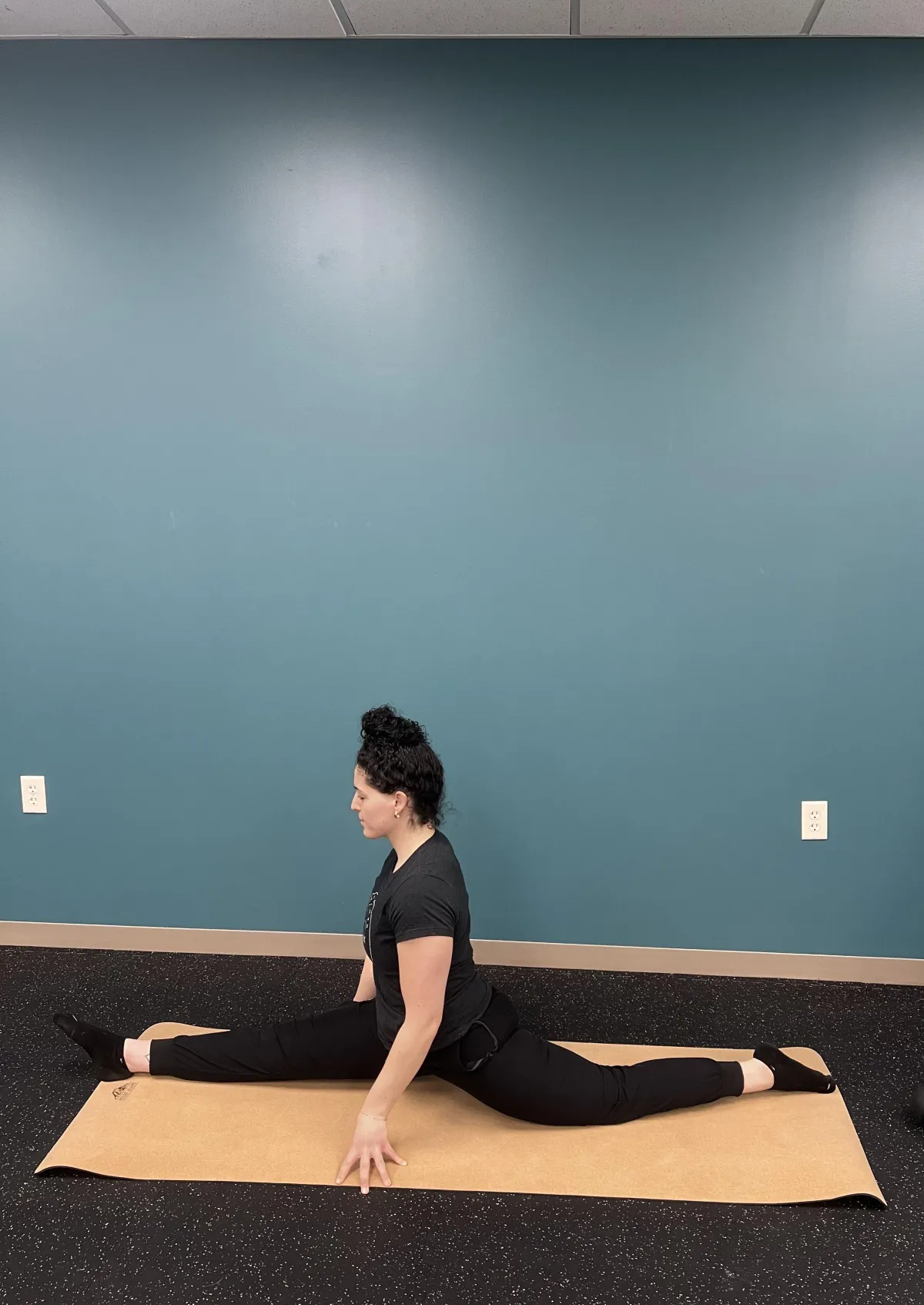
EDS vs. HSD — What's the Difference and Why Does It Matter for Your Treatment?
EDS vs. HSD — What's the Difference and Why Does It Matter for Your Treatment?
If you've spent any time in the hypermobility world — scrolling through support groups, bouncing between specialists, or trying to explain your symptoms to yet another provider — you've probably encountered both terms: Ehlers-Danlos Syndrome and Hypermobility Spectrum Disorder. They're often used interchangeably, sometimes even by doctors. But understanding the difference between the two isn't just a technicality. It can completely change how your body is assessed, what treatment actually helps, and why you may have felt dismissed or misunderstood for years.
What Do EDS and HSD Actually Mean
Ehlers-Danlos Syndrome is a group of heritable connective tissue disorders. There are 13 subtypes, but by far the most common is hypermobile EDS — hEDS — which accounts for the vast majority of EDS diagnoses. Unlike most other subtypes, hEDS doesn't yet have an identified genetic marker, which means diagnosis is clinical, based on a specific set of criteria established in 2017 by an international consortium of experts.
Hypermobility Spectrum Disorder is a newer classification, also introduced with those 2017 criteria. It encompasses people who have clinically significant, symptomatic hypermobility — meaning their flexibility is causing real problems — but who don't meet the full diagnostic threshold for hEDS. HSD is further broken down into subtypes based on which joints are affected and how widespread the hypermobility is.
Both conditions involve connective tissue that is more lax than typical. Connective tissue is essentially the scaffolding of your body — it makes up ligaments, joint capsules, fascia, blood vessel walls, and more. When that scaffolding is more elastic than it should be, joints move beyond their intended range, the body has to work harder to create stability, and a cascade of downstream symptoms can follow.
So What's the Actual Difference?
The 2017 hEDS diagnostic criteria are specific. To receive that diagnosis, a person must meet criteria across three categories: generalized joint hypermobility, systemic features like skin texture changes, tissue fragility, or pelvic organ prolapse, and secondary musculoskeletal features like chronic widespread pain or mild skin involvement. A positive family history and the absence of an alternative connective tissue diagnosis are also required.
HSD is diagnosed when hypermobility is present and symptomatic, but the full hEDS picture isn't there. Many people with HSD experience the same degree of pain, fatigue, functional limitation, and frustration as those with hEDS. The difference is in the diagnostic checklist, not necessarily in how that person's daily life is affected.
Here's the most important clinical takeaway: the label matters less than understanding the underlying connective tissue behavior and how it affects your entire system.
Why Does the Label Affect the Care You Receive?
In an ideal world, it wouldn't. But in practice, the distinction does carry some clinical weight — not because one diagnosis is more valid than the other, but because hEDS tends to correlate with a higher burden of systemic involvement.
People with hEDS are more likely to also be managing dysautonomia (including POTS), gastrointestinal dysmotility, mast cell activation syndrome, chronic fatigue, and a higher degree of sensory sensitization. The more systemic the connective tissue involvement, the more complex the clinical picture becomes and the more critical it is that every provider on your team understands how these systems interact.
HSD can — and often does — present more locally. Someone might have significant hypermobility in the lower extremities and pelvis with minimal involvement elsewhere, and their symptoms may center primarily around pain and instability rather than a full multi-system picture. That doesn't make their experience less real, but it may change the scope and sequencing of treatment.
Both populations are frequently failed by conventional medical care for the same core reason: providers are trained to look at isolated regions and isolated diagnoses. EDS and HSD are whole-body conditions that don't respect specialty boundaries.
What Does This Mean for Physical Therapy?
This is where things get particularly important — and where a lot of people with EDS and HSD have had frustrating or even harmful experiences with PT in the past.
Traditional physical therapy approaches often miss the mark with hypermobile bodies because they're built on assumptions that don't apply. Stretching is a cornerstone of most PT programs, but in a hypermobile body, perceived tightness is usually a protective response — muscles guarding because passive structures can't provide adequate stability. Stretching those muscles may feel good momentarily, but it removes the only active protection the joint has. We'll talk more about this in a future post in this series.
Similarly, aggressive joint mobilization, high-load strengthening before the neuromuscular system is ready, and isolated regional treatment all tend to fall short. What actually works for EDS and HSD looks different:
Whole-system assessment. Pain in your hip might be driven by instability in your lumbar spine, altered mechanics through your pelvis, or a pelvic floor that's working overtime as a compensatory stabilizer. Treating the hip in isolation rarely holds.
Neuromuscular control before load. Before adding weight or resistance, the nervous system needs to learn how to activate muscles at the right time, in the right sequence, with the right coordination. This is especially true around the pelvis, hips, and spine.
Staged, progressive programming. There's no shortcut through this. Hypermobile tissue needs to be loaded gradually and consistently, with attention to how the entire system is responding — not just whether the painful area feels better that week.
Addressing sensory sensitization. Chronic pain in connective tissue disorders isn't just a structural problem. The nervous system becomes sensitized over time, which changes how pain signals are processed and amplified. Effective treatment has to account for this.
Understanding the pelvic floor's role. For many people with EDS and HSD — particularly women — pelvic floor dysfunction is part of the picture, whether or not it's been identified. The pelvic floor is a central player in pressure management, spinal stability, and load transfer through the body. When connective tissue is lax throughout the system, the pelvic floor is often affected, and often compensating.
You Deserve Care That Sees the Full Picture
If you've been told your hypermobility is "just how you're built," that you're too flexible to be in that much pain, or that PT didn't work for you — there's a good chance you haven't experienced physical therapy that was actually designed for connective tissue complexity.
EDS and HSD require providers who understand that your body is an interconnected system, that your symptoms make sense given your underlying biology, and that the goal of treatment is not to make you less flexible — it's to build the strength, control, and stability your connective tissue can't provide on its own.
Schedule Your Comprehensive Evaluation
Fill out a contact form here to schedule a free consultation call with one of our providers.
Serving patients throughout Western Massachusetts and Northern Connecticut, including:
- Springfield area
- Longmeadow, Wilbraham, West Springfield, Hampden
- Agawam, Enfield, Windsor, Somers, Suffield
- Greater Hartford area

Contact Us
Phone: (413) 224-6657
Fax: (413) 273-8203
Email: [email protected]
280 N. Main Street Suite 10A, East Longmeadow, MA 01028
Hours of Operation
Monday - Thursday: 7:00am - 7:00pm
Friday - 7:00am - 4:00pm